System notes

Technical notes on Useful AI.

Leoric Technologies explores the practical layer around AI adoption: AI-ready data, right-sized model use, workflow automation, reviewable outputs, local-first patterns, and cost-aware operational decision support.

These notes describe prototype directions and engineering patterns. Public systems shown by Leoric are prototypes, product concepts, technical research, or self-contained demos using public or sample data unless otherwise stated.

01 / Data

AI-ready data starts before the model.

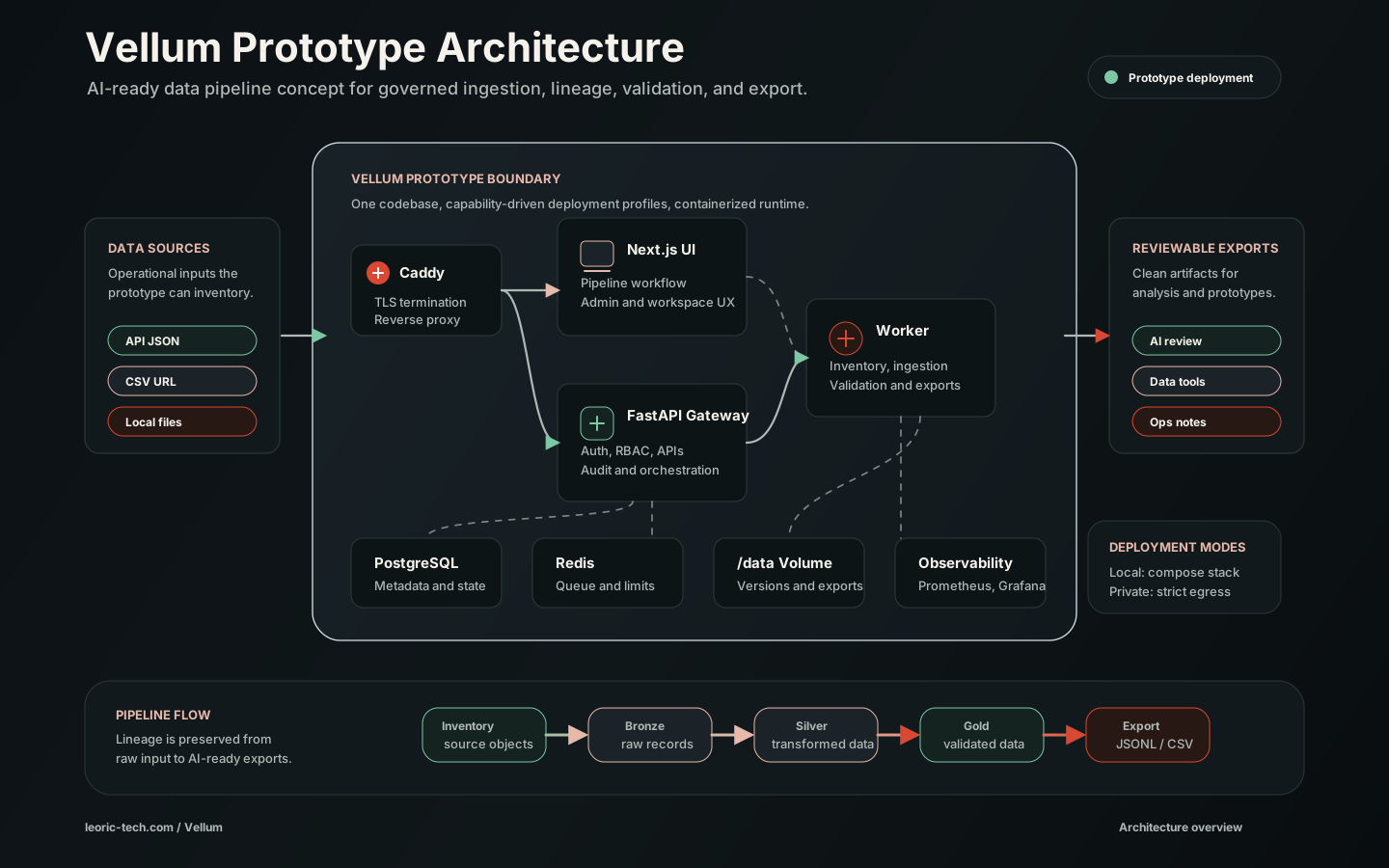
Useful AI depends on source inventory, schema decisions, dataset versions, validation rules, lineage, and explicit export paths. A prototype should make those boundaries visible before it adds recommendations or automation.

02 / Review

Reviewable AI is an interface problem as much as a model problem.

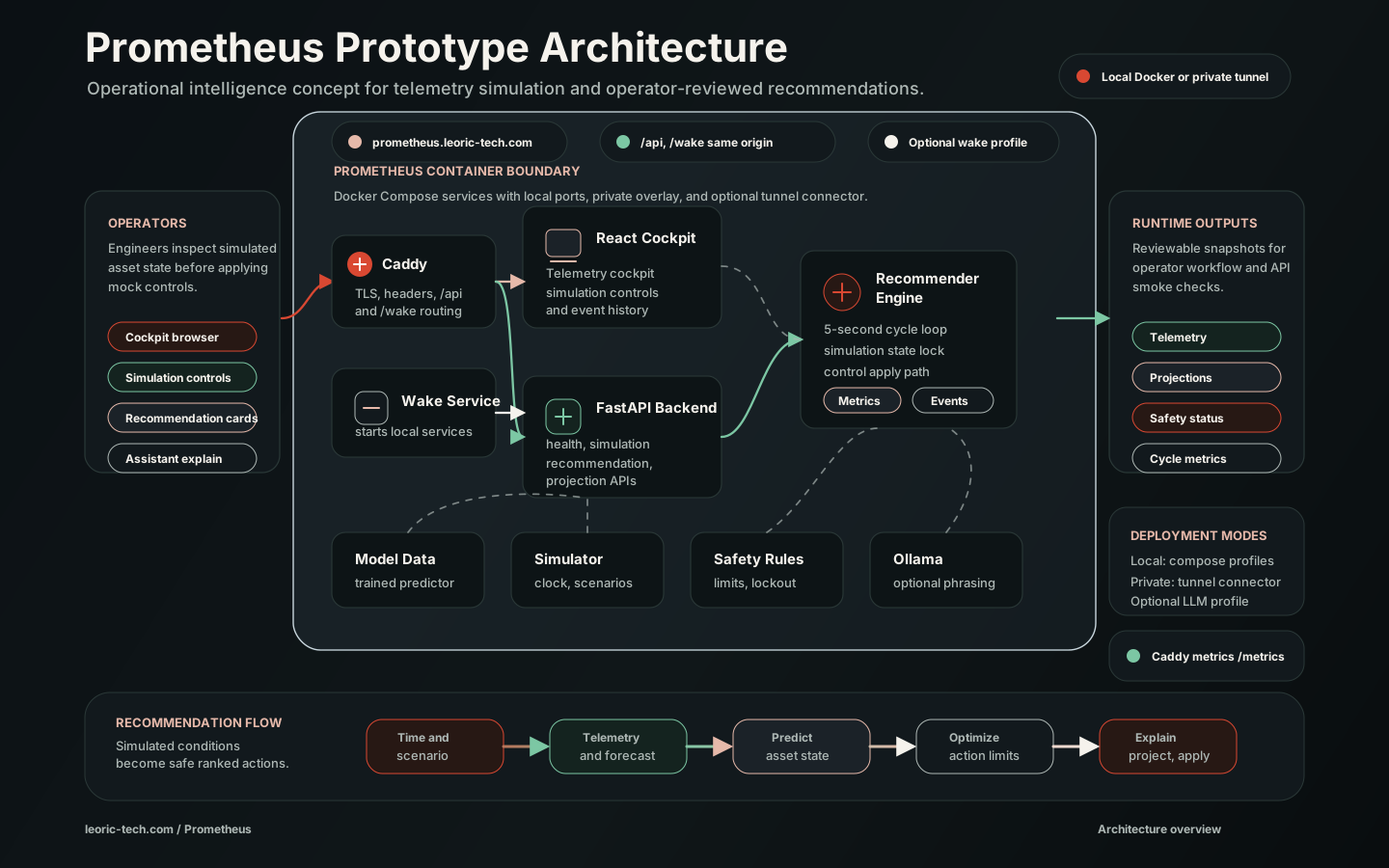
People need to inspect inputs, see why a recommendation was produced, compare alternatives, and override outputs. The review loop belongs in the product shape, not as an afterthought.

03 / Boundaries

Private-data aware design changes the architecture.

Operational data often carries context that should stay inside controlled infrastructure. Local-first patterns, constrained network paths, and explicit export steps keep the system easier to reason about.

04 / Cost

Right-sized AI treats model choice as a system decision.

Larger models are useful for some tasks and excessive for others. Many workflows need systems that are reliable enough to use, reasonable enough to run, controllable enough, and simple enough to adopt.

Research threads

Current directions.

The work is intentionally narrow: practical patterns for data-heavy workflows where automation should be inspectable, bounded, private enough to trust, and useful before it is scaled.

Vellum Messy files, metadata, exports, documents, and records turned into reviewed, validated, exportable dataset versions.
Prometheus Telemetry, external signals, site context, cost constraints, and operator rules shaped into reviewable operational recommendations.
Workflow automation Intake, extraction, routing, review queues, local-first patterns, and controlled handoffs for repetitive knowledge work.